
 English
 中文简体

For a café, buying straws may seem like a minor decision. Then customers complain that paper straws go soft, a smoothie is too thick for the opening, or staff spend extra time cleaning reusable ones. Suddenly, the choice matters more than the price on the quotation.
Paper, PLA, and bamboo are three alternatives to conventional plastic straws, but they suit different kinds of business. Paper is common in takeaway service, PLA has a feel closer to ordinary plastic, and bamboo is often used for drinks served with reusable accessories.
There is no single option that works for every beverage business. A juice bar serving hundreds of takeaway drinks has different priorities from a hotel bar or a factory producing packaged beverages. For buyers sourcing Environmentally Friendly Straws, the useful question is simple: will the straw work with the product, the customers, and the way the business operates?
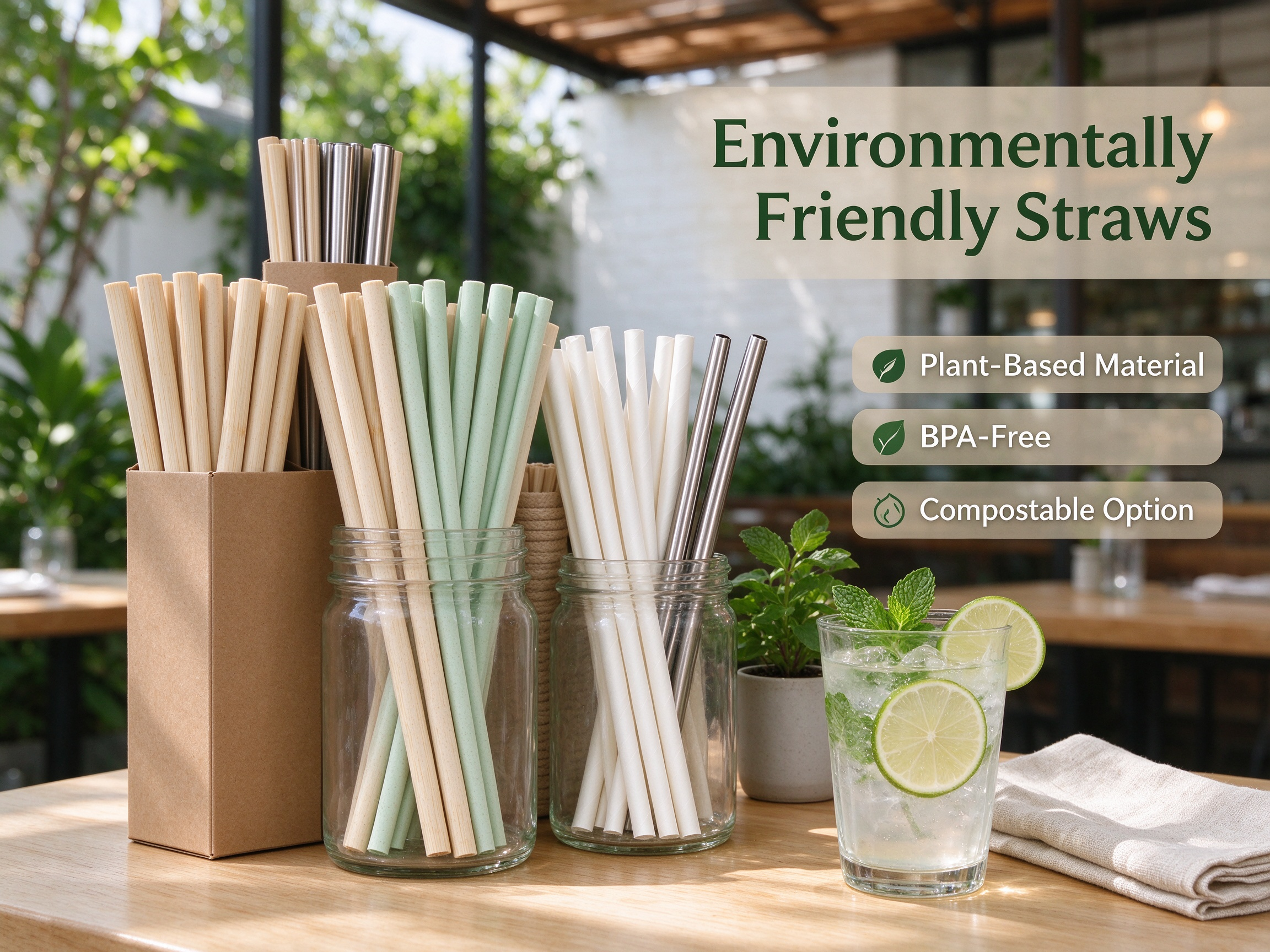
How Are Paper, PLA, and Bamboo Straws Different?
Paper straws are made by bonding layers of paper with adhesive. They're generally disposable, and manufacturers can supply different sizes, colors, and printed designs. Their performance depends on the paper and how the straw is made, so two paper straws may behave quite differently in the same drink.
PLA stands for polylactic acid, a bioplastic commonly made from renewable raw materials such as corn starch or sugar-based feedstocks. It can feel similar to conventional plastic, which some customers prefer. However, the material alone doesn't tell buyers how well a particular product performs or how it should be disposed of.
Bamboo straws are usually designed for repeated use. They're rigid and have a natural appearance, making them suitable for some hotels, bars, and cafés. Unlike disposable straws, they need to be cleaned, checked, and dried before being used again.
The difference isn't just the raw material. It's also what happens during and after use. A disposable straw needs to work for the duration of a drink. A reusable one needs to hold up over repeated use. Both need to meet the requirements of the business buying them.
Paper Straws for Cafés and Takeaway Drinks
Paper straws make sense for businesses that go through large quantities every day. Coffee shops, fast-food outlets, juice bars, and takeaway chains can distribute them quickly without setting up a cleaning process.
Their weakness is familiar: some become soft before the drink is finished. How quickly this happens depends on the paper construction, adhesive, drink, and length of time the straw stays in liquid.
For a customer who finishes a soda on the way to work, that may not be an issue. Someone slowly drinking an iced coffee over an hour may feel differently. Smoothies and milkshakes create another challenge because they often need a wider opening and enough strength to handle thicker liquids.
Paper straws can be a reasonable choice for high-volume takeaway service, especially when customers finish their drinks quickly. Printed patterns and individual wrappers are also available for businesses that want branded products.
Still, don't choose a straw based on appearance alone. Ask about its food-contact documentation, including information relevant to the adhesives and inks used. Then test samples with the actual drinks on your menu. A straw that works well with soda may not be suitable for a thick fruit smoothie.
PLA Straws for a Firmer Drinking Experience
Some customers simply prefer the feel of plastic. They may find paper straws uncomfortable, particularly when the straw softens during use. PLA can provide a firmer alternative while offering a different material choice from conventional petroleum-based plastic.
PLA straws are available in several sizes and may suit iced tea, cold coffee, soft drinks, and certain juice products. Their suitability depends on the design and temperature limits specified by the manufacturer. Buyers should check these details instead of assuming all PLA straws perform alike.
Disposal is where things get more complicated.
A PLA straw described as industrially compostable generally needs suitable composting conditions. It won't necessarily break down quickly in a garden, a home compost bin, or an ordinary waste collection system. Some facilities don't accept PLA products at all.
That matters when choosing a supplier. A restaurant could buy compostable straws with good intentions but still send them into a waste stream that cannot process them as intended.
Before switching to PLA, find out whether the product has a recognized compostability certification and whether local waste services accept it. If no suitable disposal route exists, the claimed benefit may not translate into a practical result.
Bamboo Straws for Hotels and Bars
Bamboo straws are often used where appearance matters and reusable products fit the service style. A hotel serving cocktails, for example, may prefer them for selected drinks. They can also work in cafés that already have a routine for washing and reusing beverage accessories.
The extra work is easy to underestimate. Used straws need to be collected, cleaned properly, inspected, and dried before they're put back into service. For a busy venue, that means additional staff time and a process that has to be managed consistently.
Bamboo products also vary in size and finish. A narrow straw might suit a cocktail but be inconvenient for a thick smoothie. Rough surfaces, inconsistent openings, or poor finishing can affect the customer experience.
The environmental argument depends partly on how often each straw is reused. A durable straw used repeatedly serves a different purpose from one discarded after a few drinks. Cleaning, product life, transport, and eventual disposal also need to be considered.
For business buyers, the decision comes down to practicality. Will the straws last? Can staff clean them properly during busy periods? Is the reusable system worth the extra work? Those answers matter more than the natural appearance alone.
Paper vs PLA vs Bamboo: A Practical Comparison
Here's how the three options compare for common purchasing requirements.
|
Factor |
Paper straws |
PLA straws |
Bamboo straws |
|---|---|---|---|
|
Typical use |
Single-use drinks |
Usually single-use drinks |
Commonly reusable |
|
Drinking feel |
May soften over time |
Similar to conventional plastic in some designs |
Firm and rigid |
|
Thick drinks |
Depends on diameter and construction |
Depends on diameter and design |
Needs a suitable opening |
|
Time in liquid |
May soften during longer use |
Performance depends on product specifications |
Usually remains rigid with proper care |
|
Cleaning |
Usually discarded after use |
Usually discarded after use |
Requires cleaning and drying |
|
End-of-life handling |
Depends on product and local facilities |
Composting requires suitable conditions and facilities |
Reuse and eventual disposal both matter |
|
Branding |
Printing and custom colors may be available |
Depends on supplier |
Depends on surface and design |
|
Main concern |
Strength when wet |
Disposal arrangements |
Cleaning and durability |
No material automatically wins across the board. A paper straw may be fine for a short takeaway drink but frustrating for someone nursing an iced coffee. PLA may provide a familiar feel but be unsuitable for the local waste system. Bamboo can reduce disposable straw use, provided the business actually reuses the products.
Which Straws Work for Different Beverage Businesses?
Cafés and takeaway chains often need an affordable disposable product that's easy to store and distribute. Paper may work well for drinks consumed shortly after purchase. PLA is another possibility where local regulations permit it and appropriate disposal facilities are available.
Smoothie bars and bubble tea shops should pay close attention to size. Tapioca pearls, fruit pieces, and thick mixtures need enough room to pass through the straw. If the opening is too small, changing the material won't solve the problem. Test the diameter with the actual drink before ordering.
Hotels and cocktail bars may find bamboo suitable for selected drinks. The look can fit the service, but reusable straws only work well when staff have the time and facilities to clean them. A small venue with limited washing space may find the process more trouble than it's worth.
Event and catering businesses need to think about what happens after service. Disposable straws may be easier to manage when hundreds of drinks are served quickly and washing facilities are limited. Local restrictions and waste collection arrangements still need to be checked.
Packaged beverage manufacturers have a different set of requirements. The straw must fit the package, wrapper, and attachment method, and it may need to pass through automated equipment. A product that works perfectly well in a drinking test can still cause problems on a production line.
For packaged drinks, test samples with the complete package and production process. Don't approve a new straw based only on how it feels in a glass.
Looking Beyond the Price Per Straw
When ordering thousands of straws, the unit price naturally gets attention. But a cheap product can become an expensive choice if it causes complaints, needs frequent replacement, or doesn't suit the business's waste-handling arrangements.
Paper and PLA straws are usually bought for single use, so new stock must be ordered regularly. Shipping, packaging, storage, and waste handling add to the cost.
Bamboo involves a different calculation. The purchase price may be higher, but each straw can be reused if it remains in good condition. The business also needs to account for staff time, cleaning, inspection, and losses.
|
Cost factor |
Paper |
PLA |
Bamboo |
|---|---|---|---|
|
Purchase cost |
Depends on paper quality and construction |
Depends on specifications and certification |
Depends on quality and finish |
|
Storage |
Needs protection from moisture |
Follow supplier instructions |
Requires suitable storage |
|
Labor |
Low for single-use service |
Low for single-use service |
Higher because of cleaning and inspection |
|
Waste handling |
Depends on local collection and processing |
May require industrial composting facilities |
Requires reuse management and eventual disposal |
|
Customization |
Printing options may be available |
Depends on supplier capabilities |
Depends on design |
A useful comparison is the cost per drink served, not simply the price of one straw. For bamboo, estimate how many uses each straw realistically provides. For disposable options, include replenishment and waste costs. Use figures from your own operation wherever possible; assumptions can make a product look cheaper than it really is.
What Should Buyers Check Before Ordering?
A sample order can prevent a much larger purchasing mistake. Before approving bulk production, check a few things with the supplier.
- Size and fit: Make sure the straw works with your cups, lids, and drinks.
- Performance: Test it under real serving conditions, including thick or acidic drinks where relevant.
- Food-contact requirements: Request the appropriate documents for the market where the product will be sold.
- Environmental claims: Check the supporting certification and the conditions required for compostability or biodegradability claims.
- Consistency: Ask how dimensions, strength, appearance, and packaging are checked during production.
Supply arrangements: Confirm minimum order quantities, Delivery times, customization options, and how quality problems are handled.
Custom orders need extra attention to printing, color, wrappers, and packaging requirements. If straws will be attached to packaged beverages, test them on the intended production equipment before committing to a full run.
It's also worth agreeing in advance on what happens if a shipment doesn't meet the specification. That conversation is much easier before production starts than after the goods arrive.
Choosing a Straw That Fits the Business
Paper, PLA, and bamboo serve different purposes. Paper is commonly used for disposable takeaway drinks. PLA may suit businesses that need a firmer straw and have a suitable disposal route. Bamboo can work for reusable service when cleaning and maintenance are manageable.
For buyers, the decision should start with the menu and the way the business operates. There's little value in choosing a material that sounds environmentally friendly if it creates problems for staff, customers, or local waste services.
When sourcing Environmentally Friendly Straws, request the relevant specifications and supporting documents, then test samples with real drinks. A product that works reliably in service and fits the business's budget and waste arrangements is a more practical choice than one selected on its material label alone.
 Phone

 Email

 SUBSCRIBE


