
 English
 中文简体

Sustainable Straw Innovation
Say Goodbye to "Soggy" Paper Straws! Soton PHA Biodegradable Straws
Redefining eco-friendliness and drinking comfort through material innovation, practical performance, and product customization.
As "plastic reduction" becomes a global consensus, the beverage and catering industries are undergoing a profound green revolution. However, from paper drink straw—often criticized for "getting soggy and leaving a papery taste"—to PLA (polylactic acid) straws, which require strict industrial composting conditions, businesses and consumers alike have been searching for a straw that preserves the user experience of traditional plastic straws while supporting biodegradation.
As a straw manufacturer, Soton (Yiwu Shuangtong Daily Necessities Co., Ltd.) presents its PHA Biodegradable Straws, developed around material innovation, drinking comfort, and the needs of food-service businesses.
This is more than a change in straw material. It reflects a product approach centered on practical performance, environmental considerations, and everyday use.
1. Scientific Decode: What Is PHA?
To understand the material behind Soton PHA straws, it helps to look at Polyhydroxyalkanoates (PHA), a family of polyesters produced by microorganisms. Certain microorganisms synthesize PHA as an energy-storage material under specific conditions, making it a focus of research into bio-based plastics.
A Microbially Produced Material
PHA is produced through microbial processes rather than relying solely on conventional fossil-based plastic feedstocks. Its properties and biodegradation behavior depend on the particular PHA formulation, the surrounding environment, and the conditions under which degradation occurs.
Bio-Based Composition and Product Safety
PHA-based products are designed around bio-synthesized polymers. For any straw intended for food contact, safety should be confirmed through the relevant material documentation, food-contact testing, and applicable regulatory requirements. Product-specific evidence is important when evaluating claims about additives, BPA, or suitability for particular users.
2. Biodegradation: Why the Disposal Environment Matters
Biodegradable materials do not all behave in the same way after disposal. PLA straws, for example, commonly rely on controlled industrial composting conditions for effective degradation. PHA can biodegrade under a range of conditions, but the rate and extent depend on the material formulation and the environment.
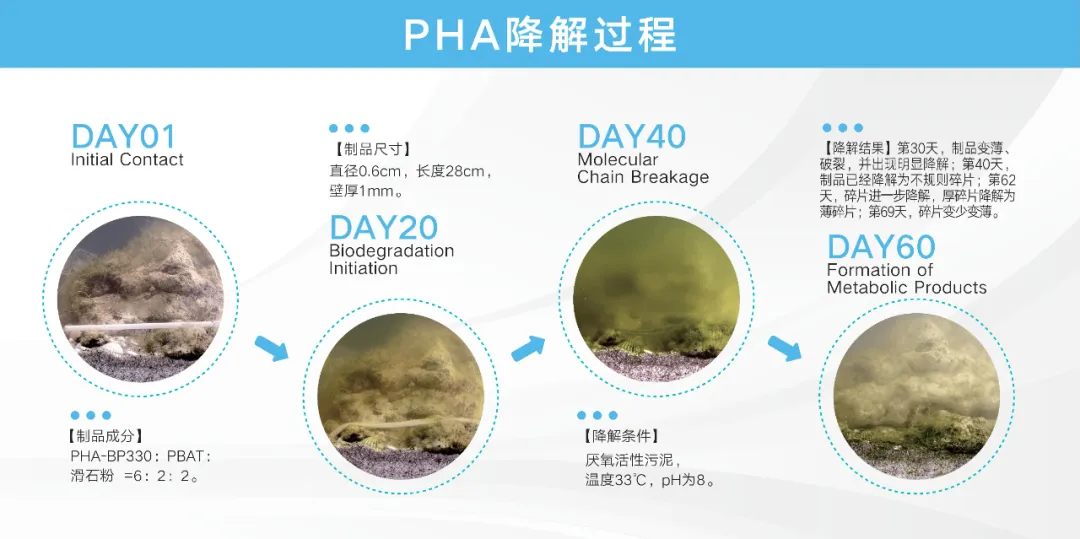
For this reason, claims about biodegradation should be matched to test results for the specific product and disposal setting. Freshwater, marine environments, soil, landfill, home composting, industrial composting, and anaerobic digestion each present different conditions.
- Freshwater and marine environments: Confirm performance through tests relevant to the specific aquatic environment.
- Soil and landfill: Degradation depends on environmental conditions, including temperature, moisture, and microbial activity.
- Home and industrial composting: Check whether the product has been tested and certified for the intended composting system.
- Anaerobic digestion: Suitability should be verified against the requirements and operating conditions of the facility.
Important: Biodegradation performance should be supported by product-specific test reports or certifications. A material's ability to biodegrade in one environment does not automatically establish the same performance in every other environment.
3. Drinking Performance: Comfort for Hot and Cold Beverages
Consumers often associate biodegradable straws with softness, sogginess, or an unwanted taste. A straw's practical performance depends on its material formulation, dimensions, wall thickness, and intended use. Soton PHA straws are designed to offer an alternative for beverage service where drinking comfort and material performance both matter.
Water Resistance and Shape Retention
Compared with paper straws, PHA straws can offer a different balance of water resistance and physical strength. Actual performance should be assessed under the intended beverage conditions and usage duration.
For Hot and Cold Drinks
The stated operating range for this product is -10°C to 90°C. Buyers should confirm the applicable product specifications and validate performance for their particular beverages and serving conditions.
For beverage brands and catering operators, useful evaluation points include whether the straw maintains its shape during use, whether it affects the taste or aroma of the drink, and whether its performance matches the intended serving temperature and duration.
4. Specifications and Customization Services
Different beverage businesses have different requirements for straw dimensions, appearance, and use. Soton offers a range of customization options to help customers match their straws with their drinks, packaging, and brand identity.
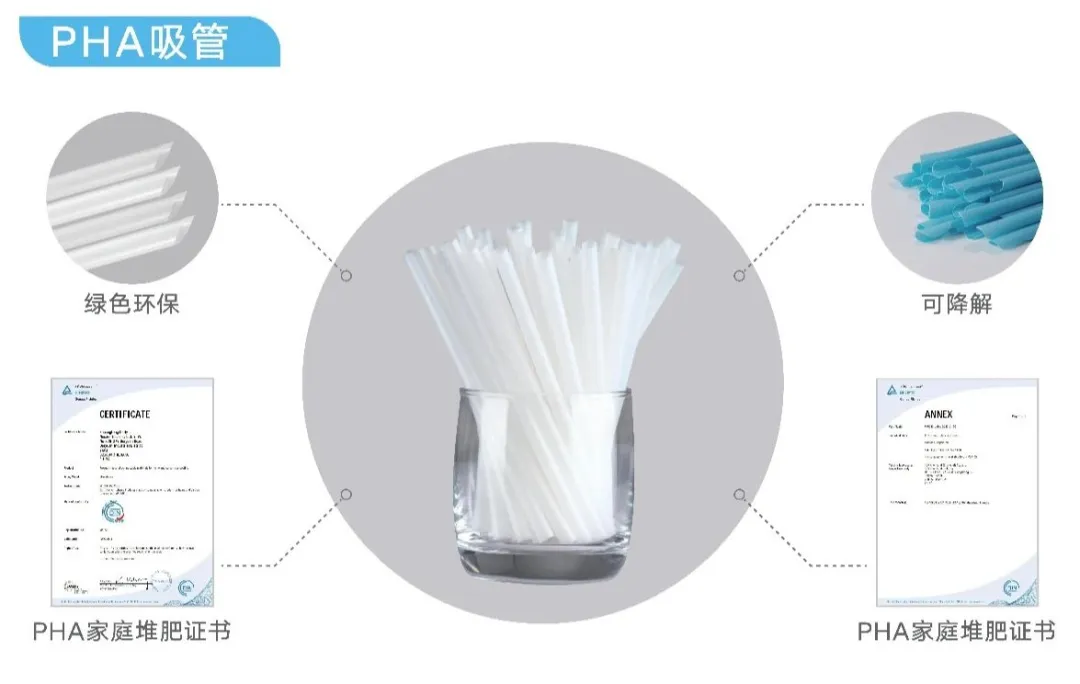
| Item | Specifications & Customization Details |
|---|---|
| Product Name | Soton Polyhydroxyalkanoate (PHA) Biomass Biodegradable Straws |
| Core Raw Material | Polyhydroxyalkanoates (PHA) |
| Product Color | Natural white; other colors may be available for brand customization |
| Style Customization | Straight, sharp-tip, spoon-shaped, and flexible (bendable) styles |
| Shelf Life | 18 months, subject to the product's stated storage conditions and packaging |
| Temperature Range | -10°C to 90°C, subject to product specifications and intended use |
| Storage Method | Store in a cool, dry place away from direct sunlight; use as soon as possible after opening |
5. Individually Wrapped Straws for Everyday Hygiene
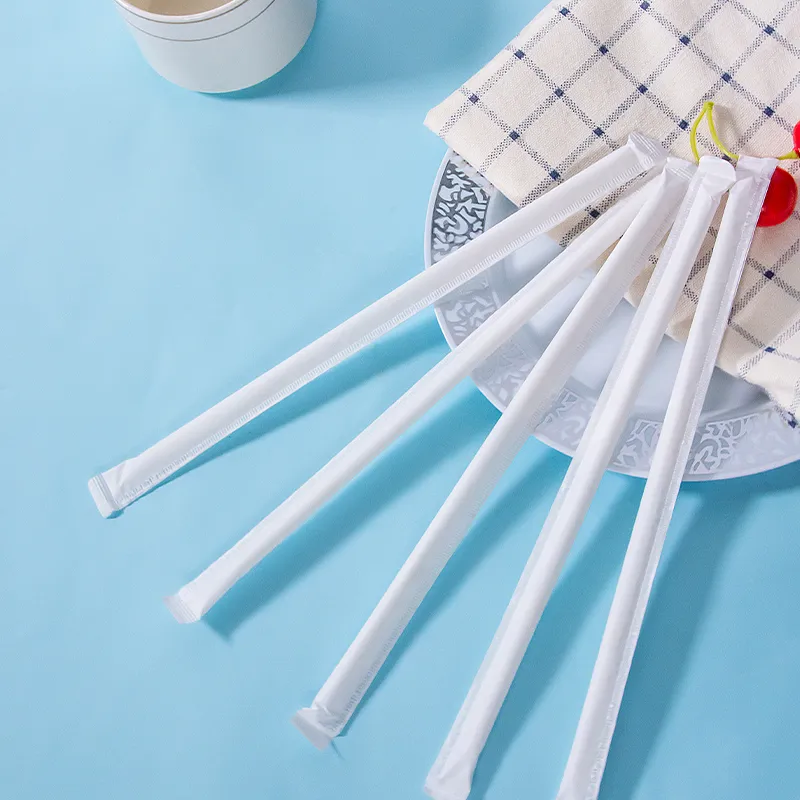
During daily commutes, office hours, and outdoor dining, the way drinking straws are stored and handled can affect their cleanliness before use. Individual packaging offers a practical way to keep each straw separate until it is needed.
Individually Wrapped for Convenient Handling
Individually wrapped PHA straws are easy to distribute in cafés, takeaway orders, offices, travel settings, and other food-service environments. The wrapper helps protect each straw during storage and handling, provided the package remains intact until use.
Whether paired with morning coffee, afternoon tea, or a cold beverage on the go, individual packaging makes straws convenient to carry and dispense. Businesses should select packaging formats that suit their hygiene procedures, storage practices, and customer needs.
6. Soton's Manufacturing Experience, Expertise, and Quality Commitment
Choosing a biodegradable straw involves more than looking at its raw material. Buyers may also need to understand the manufacturer's production capabilities, quality management, testing documentation, and ability to maintain consistency across orders.
Manufacturing Background
Soton brings experience in straw manufacturing and production operations. Buyers can review factory capabilities and production controls when assessing suitability for their supply needs.
Material and Process Development
PHA processing requires attention to material behavior, forming conditions, and finished-product performance. Product specifications and sample evaluation help establish whether the straw meets the intended application.
Testing and Documentation
Relevant food-contact reports, biodegradation test results, and certifications can help buyers assess product claims. Documentation should correspond to the specific product and the standards being claimed.
Quality and Traceability
Clear specifications, incoming-material checks, production controls, and finished-product inspections support consistent supply and help customers evaluate quality requirements.
A Practical Step Toward More Sustainable Beverage Service
A small straw connects everyday drinking habits with wider questions about material use, product performance, and waste management. PHA offers another material option for businesses seeking alternatives to conventional plastic and paper straws, but the right choice depends on the required drinking experience, the product specifications, and the available end-of-life infrastructure.
Soton is dedicated to the research, development, and manufacturing of straw products for food-service applications. Its PHA biodegradable straws are designed to address practical needs such as beverage compatibility, product styles, individual packaging, and customization.
For catering brands and global partners considering PHA straws, reviewing samples, technical specifications, and relevant test documentation is a useful starting point. Contact Soton to discuss product requirements and explore options for your beverage business.
 Phone

 Email

 SUBSCRIBE


