
 English
 中文简体

Short answer: choose paper straws for cold drinks that are served and finished within minutes, and for markets where a fibre straw is the expected format. Choose PLA straws when drinks sit longer, when the straw must stay rigid in thick liquids, or when industrial composting is available locally. Paper softens with water; standard PLA softens with heat.
What are paper drinking straws?
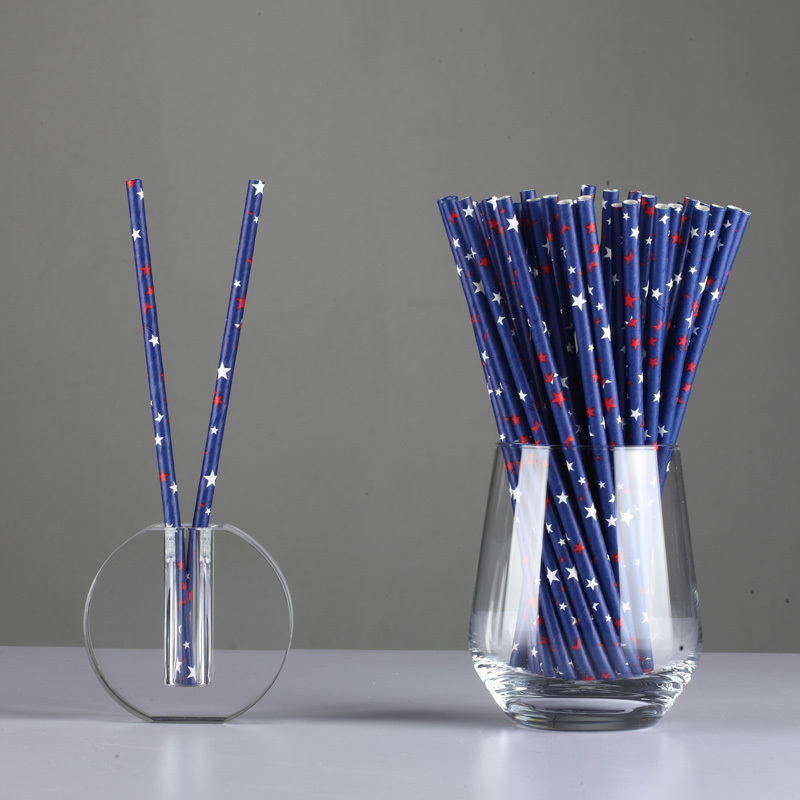
Paper drinking straws are tubes built from food-grade paper wound in bonded layers, usually three plies for food-service grades, and held together with a food-grade adhesive. The paper is the structural material: there is no plastic core. Performance therefore depends on paper weight, ply count, wall thickness, adhesive and any surface treatment, not on a single "quality" setting.
Paper for straws can be supplied with FSC chain-of-custody certification, which lets a buyer trace the fibre back to responsibly managed forests. The claim only covers specific product groups and activities, so the certificate has to be read rather than glanced at: check the scope line (FSC 100%, FSC Mix or FSC Recycled), the certified activity, and — most often missed — the expiry date. A chain-of-custody certificate can look entirely convincing and still be out of date, because renewal is a separate audit. For European retail and food-service buyers, this certificate is usually requested alongside food-contact documentation.
What are PLA drinking straws?
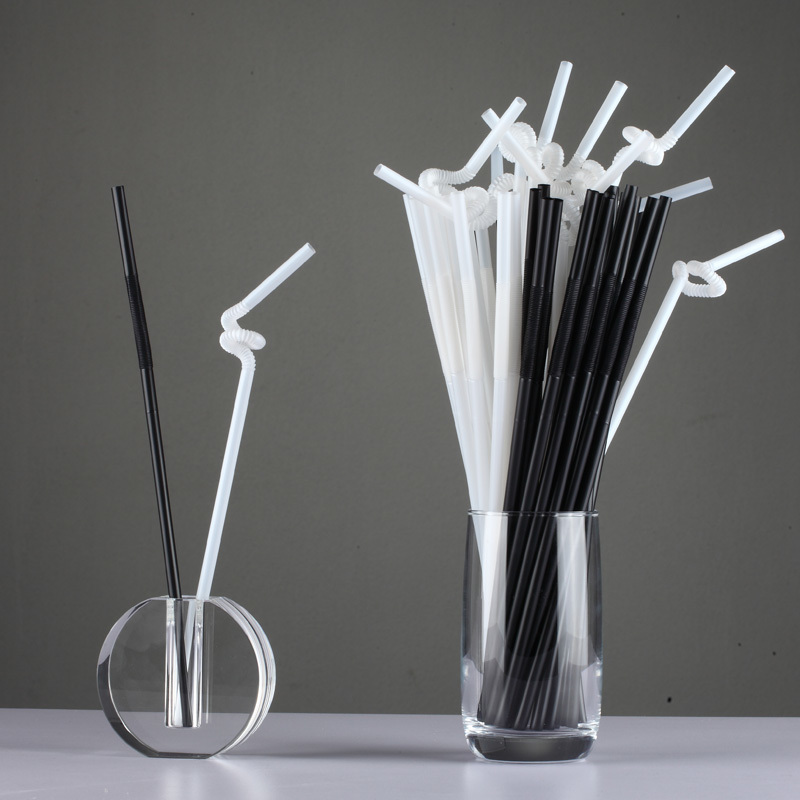
PLA, or polylactic acid, is a biobased polyester made by polymerising lactic acid obtained from fermented plant sugars such as corn or sugarcane. It is not paper and it is not petroleum-based plastic; it is a third category, and it behaves differently from both.
Standard PLA is rigid, smooth and either clear or opaque. Its glass transition temperature sits around 55 to 65 degrees Celsius, which is why it performs well in iced drinks and poorly in hot ones. Because PLA does not absorb water, a PLA straw keeps its stiffness for hours in a cold drink, which is exactly where paper struggles.
How do the two materials behave in service?
The differences that matter at the counter are temperature tolerance, behaviour in liquid, and how the straw looks and prints.
| Property | Paper straw | PLA straw |
|---|---|---|
| Best suited to | Cold drinks finished quickly | Cold drinks with longer dwell time |
| Heat | Softens faster as drink temperature rises | Standard PLA deforms near 55–65 °C |
| Water | Absorbs water; stiffness falls over time | Does not absorb water |
| Mouthfeel | Fibre texture, slightly papery | Smooth, firm, plastic-like |
| Look and printing | Opaque; full-surface custom print | Clear or opaque; limited print area |
| Home composting | Uncoated: possible. Coated: generally not | Standard PLA: no |
| Industrial composting | Uncoated: yes. Coated: depends on the coating | Yes, when certified |
| Common diameters | 6 mm standard; 8 mm for smoothies and thick drinks | 6 mm standard; 12 mm for bubble tea, so the pearls pass |
Polypropylene (PP) remains the reference point for heat: a PP straw handles hot drinks, including near-boiling ones, and is the option to quote when the menu is built around coffee and tea rather than cold beverages. Two caveats. It is petroleum-based, so it sits outside the compostable story entirely. And it is a single-use plastic straw, so it cannot be placed on the EU market under Directive (EU) 2019/904 — quoting PP is a commercial choice that only exists in markets which still permit it. See the PP straw range for specifications.
Why do paper straws go soft, and what actually controls it?
Paper straws are made of cellulose fibres bonded into layers. Put the straw in liquid and the fibres absorb water, swell and push the structure apart; the hydrogen bonds that give the paper its stiffness weaken as water moves between them. The wall loses rigidity, then starts to collapse. This is ordinary paper chemistry, not a manufacturing defect.
Five variables decide how long a paper straw holds up:
- Ply count and paper weight. Three plies at a heavier paper weight carry more load than two plies of thin paper. This is the single biggest lever.
- Wall thickness. A thicker wall takes longer for water to penetrate through.
- Adhesive. Food-grade adhesives differ in water resistance; a straw that delaminates has usually failed at the glue line rather than through the paper itself.
- Coating. A water-based or wax barrier slows absorption, at the cost of complicating the end-of-life story. See the next section.
- Diameter and bore. A wide bubble-tea straw has more surface in contact with liquid and a longer path for the wall to soften.
Because these levers trade off against cost, the useful question is not "is this a good paper straw" but "what dwell time do you need for this drink, and what specification delivers it". Ask for dwell-time data from the actual test method, then verify it with your own drink. Our paper straw range is quoted by ply, paper weight and diameter for this reason.
When does a paper straw legally count as plastic?
This is the point most likely to catch a buyer out. Under EU guidance for the Single-Use Plastics Directive (Directive (EU) 2019/904), which has applied since 3 July 2021, single-use plastic straws cannot be placed on the EU market. The same guidance states that biodegradable plastics, and paper-based products with a plastic coating or lining, are regarded as plastics.
In practice: a paper straw laminated with a plastic film may not satisfy a "plastic-free" or Directive-compliant claim, even though the straw looks and feels like paper. An uncoated paper straw, or one with a non-plastic barrier, does not carry that problem.
So the question to put to any supplier is not "is it paper" but three specific ones:
- Is the straw coated or laminated at all?
- If so, with what, and is that substance a plastic under the applicable guidance?
- Can you put that answer in writing, with the material declaration, for our compliance file?
Compostability: industrial is not the same as home
"Compostable" on its own is not a specification. It only means something when paired with a standard and a disposal route. The two standards that appear on most straw documentation are EN 13432 in Europe and ASTM D6400 in North America, and both describe industrial composting, not a garden bin.
| Standard or claim | Region | What it actually requires |
|---|---|---|
| EN 13432 | Europe | 90% biodegradation within 6 months, and disintegration within 12 weeks with less than 10% residue above 2 mm, under industrial conditions around 58 °C |
| ASTM D6400 | North America | Comparable pass criteria for plastics designed for industrial composting facilities |
| Home composting marks | Various | Lower temperatures and a longer timeframe; standard PLA does not qualify |
The practical consequence: a certified compostable PLA straw delivers its environmental benefit only if the used straw actually reaches an industrial composting facility. In a venue where straws go into general waste, the compostable claim is a material property, not an outcome. That is worth being honest about with clients, and it is the argument for matching the material to the local waste route rather than to the marketing story.
Which documents should you request before ordering?
A straw is a food-contact article, so the paperwork matters as much as the sample. For a first order, ask for:
- Food-contact compliance for the destination market: FDA food-contact requirements for the United States, EU 1935/2004 and, for plastic components, EU 10/2011, LFGB for Germany, and GB 4806 for China.
- Migration test reports from an accredited laboratory, covering the intended use (cold drinks, acidic drinks, fatty contact).
- FSC chain-of-custody certificate if the paper content is claimed as certified — and confirm it is still within its validity period and that the scope line matches the product you are buying.
- Compostability certificate (for example BPI or TÜV OK Compost INDUSTRIAL) if a compostable claim will be printed on pack or menu.
- Coating declaration, including whether any plastic or PFAS-containing barrier is present. Peer-reviewed testing has reported PFAS detection in a share of paper straws sampled in several markets, so a written declaration is a reasonable request rather than a hostile one.
- Batch traceability, so a complaint can be traced to a production lot.
Documentation for the current range is available on request through our sales team.
Which straw fits which venue?
| Setting | Recommended | Reason |
|---|---|---|
| Cocktail bars and fast table service | Paper | The drink is finished in minutes, so sogginess never becomes the customer's problem, and full-surface print carries the brand |
| Cafés with takeaway cold drinks | Paper or PLA | Depends on how long the drink is carried and whether industrial composting exists locally |
| Bubble tea, smoothies, thick shakes | PLA | Wide bore and a rigid wall; a paper straw of that diameter softens quickly under a thick drink |
| Coffee and hot tea service | PP, only where permitted | A heat-stable straw is required; standard PLA deforms and paper softens faster. Not an option in the EU, where single-use plastic straws are banned |
| Venues with a commercial composting contract | Certified PLA | The certified disposal route the material was designed for actually exists |
| Markets enforcing the EU Directive | Uncoated paper or certified PLA | Avoids the plastic-coated paper trap described above |
| Outdoor events and festivals | PLA | Drinks are often nursed for an hour or more; a rigid, non-absorbing wall survives that better |
Frequently asked questions
Are paper straws better than plastic straws?
Neither is better in every case. Paper straws suit cold drinks that are finished quickly and markets where a fibre straw is expected. PLA straws suit longer dwell times, thick drinks and venues with access to industrial composting. The deciding variables are drink temperature, how long the drink is nursed, and what waste infrastructure exists where the straw is used.
Do PLA straws work in hot drinks?
Standard PLA straws are not suitable for hot drinks. PLA has a glass transition temperature of roughly 55 to 65 degrees Celsius, above which the straw softens and loses shape. Crystallised PLA grades resist higher temperatures, but they are a different material specification and should be quoted and tested separately before use with hot beverages.
Are PLA straws home compostable?
Standard PLA straws are not home compostable. They are designed for industrial composting, where sustained temperatures around 58 degrees Celsius and controlled moisture allow the material to break down within the timeframes set by EN 13432 and ASTM D6400. In a garden bin, in soil or in water, standard PLA degrades very slowly.
Why do paper straws go soggy?
Paper straws are made of cellulose fibres bonded into layers. When the straw sits in liquid, those fibres absorb water and swell, and the hydrogen bonds holding the paper together weaken. Stiffness drops and the wall starts to collapse. Ply count, wall thickness, adhesive and coating all change how fast this happens.
Are paper straws coated with plastic?
Some are. Paper straws may be uncoated, coated with a water-based or wax barrier, or laminated with a plastic film. Under EU guidance for the Single-Use Plastics Directive, paper-based products with a plastic coating or lining are treated as plastic. Buyers who need a non-plastic straw should ask for the coating type in writing rather than assume.
How should we test a straw against our own drinks?
Run the test with the real drink, not with water. Fill the actual cup to service volume, insert the straw, and check it at five, fifteen and thirty minutes for stiffness, wall collapse and taste transfer. Repeat with the hottest and the most acidic item on the menu. That gives a dwell-time figure you can specify, instead of relying on a supplier's general claim.
References
- European Commission, Single-use plastics — Directive (EU) 2019/904, applicable from 3 July 2021. environment.ec.europa.eu
- European Commission, Single-Use Plastics Directive guidelines (2021), including the treatment of biodegradable plastics and plastic-coated paper products. ec.europa.eu
- EN 13432 (packaging recoverable through composting and biodegradation) and ASTM D6400 (standard specification for compostable plastics), as cited in supplier declarations.
 Phone

 Email

 SUBSCRIBE


