Paper vs PLA vs Bamboo: Which Environmentally Friendly Straws Fit Different Beverage Businesses?
Compare Environmentally Friendly Straws made from paper, PLA, and bamboo to find suitable options for cafés, juice bars, hotels, and beverage brands.
ISO Drafting Unit for Drinking Straws
For a café, buying straws may seem like a minor decision. Then customers complain that paper straws go soft, a smoothie is too thick for the opening, or staff spend extra time cleaning reusable ones. Suddenly, the choice matters more than the price on the quotation.
Paper, PLA, and bamboo are three alternatives to conventional plastic straws, but they suit different kinds of business. Paper is common in takeaway service, PLA has a feel closer to ordinary plastic, and bamboo is often used for drinks served with reusable accessories.
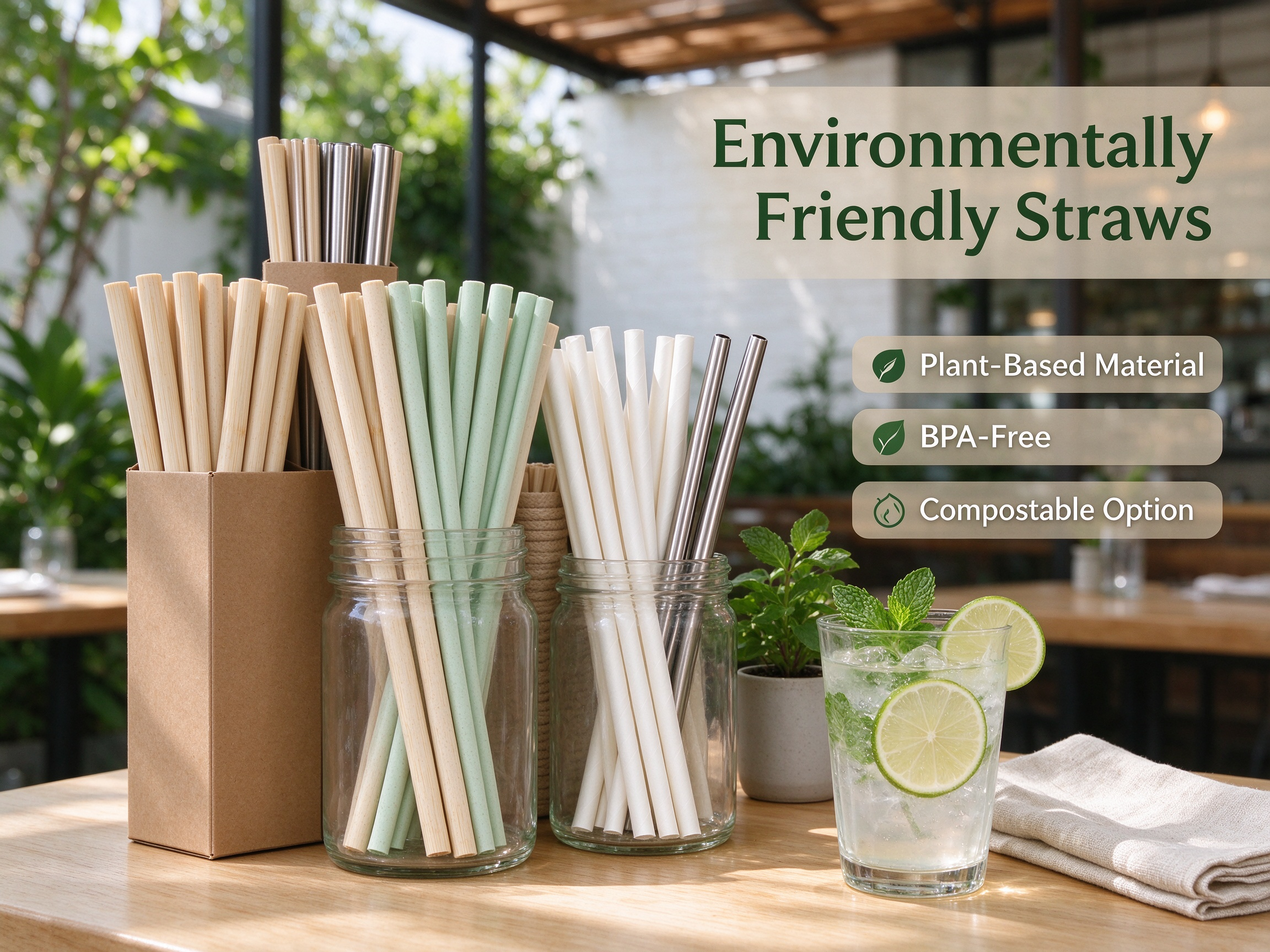
There is no single option that works for every beverage business. A juice bar serving hundreds of takeaway drinks has different priorities from a hotel bar or a factory producing packaged beverages. For buyers sourcing Environmentally Friendly Straws , the useful question is simple: will the straw work with the product, the customers, and the way the business operates?
Paper straws are made by bonding layers of paper with adhesive. They're generally disposable, and manufacturers can supply different sizes, colors, and printed designs. Their performance depends on the paper and how the straw is made, so two paper straws may behave quite differently in the same drink.
PLA stands for polylactic acid, a bioplastic commonly made from renewable raw materials such as corn starch or sugar-based feedstocks. It can feel similar to conventional plastic, which some customers prefer. However, the material alone doesn't tell buyers how well a particular product performs or how it should be disposed of.
Bamboo straws are usually designed for repeated use. They're rigid and have a natural appearance, making them suitable for some hotels, bars, and cafés. Unlike disposable straws, they need to be cleaned, checked, and dried before being used again.
The difference isn't just the raw material. It's also what happens during and after use. A disposable straw needs to work for the duration of a drink. A reusable one needs to hold up over repeated use. Both need to meet the requirements of the business buying them.
Paper straws make sense for businesses that go through large quantities every day. Coffee shops, fast-food outlets, juice bars, and takeaway chains can distribute them quickly without setting up a cleaning process.
Their weakness is familiar: some become soft before the drink is finished. How quickly this happens depends on the paper construction, adhesive, drink, and length of time the straw stays in liquid.
For a customer who finishes a soda on the way to work, that may not be an issue. Someone slowly drinking an iced coffee over an hour may feel differently. Smoothies and milkshakes create another challenge because they often need a wider opening and enough strength to handle thicker liquids.
Paper straws can be a reasonable choice for high-volume takeaway service, especially when customers finish their drinks quickly. Printed patterns and individual wrappers are also available for businesses that want branded products.
Still, don't choose a straw based on appearance alone. Ask about its food-contact documentation, including information relevant to the adhesives and inks used. Then test samples with the actual drinks on your menu. A straw that works well with soda may not be suitable for a thick fruit smoothie.
Some customers simply prefer the feel of plastic. They may find paper straws uncomfortable, particularly when the straw softens during use. PLA can provide a firmer alternative while offering a different material choice from conventional petroleum-based plastic.
Need a quote or a sample?
Send us your spec — size, material, print and quantity — and we reply within one working day.
Contact us